Beautiful shade and architectural elements of your yard, Trees contribute to the beauty and character. Trees need nurturing just like we do—especially if they pose any threat to surrounding property and people. Deadwooding trees involves the practice of removing dead, dying, or damaged branches of your trees. Well-executed deadwooding will keep trees strong and beautiful while keeping your property safe.
What Is Deadwooding?
Deadwooding is defined as the removal of any of the aforementioned unhealthy growth from your tree. All branches ultimately die but become weaker and more brittle the longer they are on the tree, so this becomes an increasing hazard during adverse weather conditions. Unlike pruning, deadwooding requires that the cut, healthy part of the branch be kept intact. This process will have been assessed and only decided upon by a specialist tree care company.
Why Is Deadwooding Important?
One of the main advantages of performing deadwooding is enhanced safety. Rotting and weak branches can pose an immediate threat to vehicles, persons, or nearby buildings and structures. Keeping them in place increases the risk of their fall. Also, the routine examination process will uncover structural defects in a timely manner. If it is too big and located near your property, deadwood tree removal might be a good idea for the trees and structures around.
It will make the tree look much healthier. It can actually make the tree look better than it once did. If a tree has a lot of unsightly dead limbs attached, pruning them away can leave the tree with a more cared-for look.
Supporting Tree Health
In addition, your dead tree branches may also serve as pathways into the system for pests and diseases. If an arborist can eliminate the problem branches, there’s an additional measure he can take to make sure there’s nothing the arborist can readily see growing into the system. But you’re not obligated to take action. In fact, Deadwood makes habitat for insects and birds as well as other animals.
When Should Trees Be Inspected?
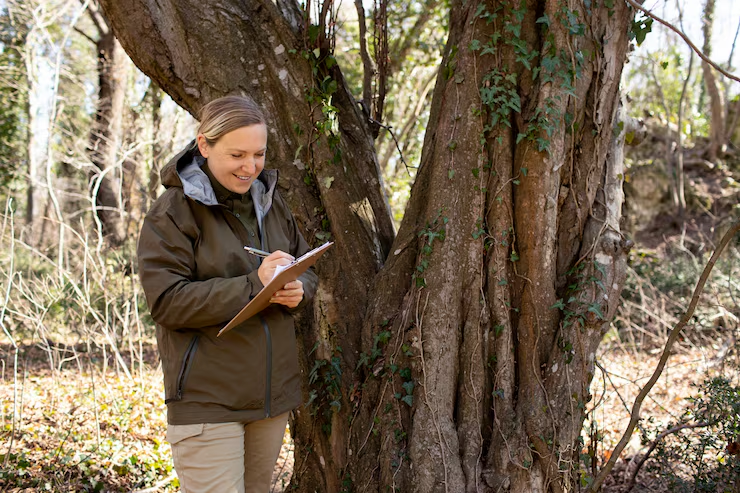
It’s important to have your trees examined regularly, especially following periods of intense weather. Older trees, trees in exposed positions or in close proximity to structures, or those with apparent cracks or damage to the limbs may be worthy of greater scrutiny. Homeowners seeking professional help with trees might also be looking for associated services and may consider maintenance that complements it, such as hedge trimming Maidstone.
Is Deadwooding Suitable for Every Tree?
Deadwooding can be applied to a wide range of trees of all sizes; however, the practice will vary on a tree-by-tree basis. The specific species, size, condition, location, size of branch, and presence of other structures can all determine the best type of maintenance.
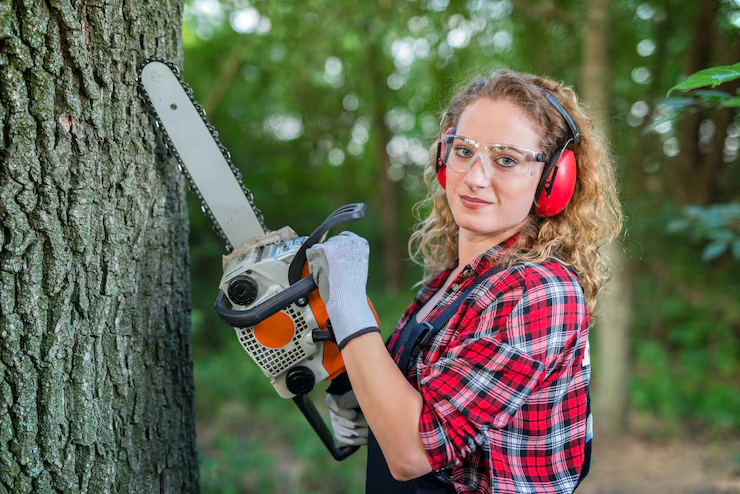
Branches of a large size or those that may be challenging to reach should always be checked over and removed by professionals. Carrying out deadwooding on trees should ideally be handled without posing any undue safety risks when large branches or any other complications arise, as this will only put further risk onto yourself if you do not have access to or the necessary tools.
Conclusion
Whether your tree needs basic pruning or its branches are posing a safety hazard, let our experienced arborists ensure its long-term health, appearance, and safety. With scheduled visits from our arborists, problem branches can be removed from your home with minimal risk to its structural integrity, while simultaneously eliminating a potential falling hazard for your family. A tree’s branches can be a beautiful element in your yard, and we promise to preserve them for years to come!
FAQs
What is deadwooding and why is it important for trees?
“Deadwood” is the term used when dead, dying, or diseased branches are removed from a tree. It is good for safety, to keep a tree looking healthy, or just for overall management of a tree.
How often should trees be inspected for deadwood?
Generally, trees should be examined at least once annually and following any significant storm or unusual weather.
How can deadwooding improve the health and safety of a tree?
It helps to eliminate harmful branches and provides opportunities for assessment of the health and structural integrity of the tree for issues like decay, disease, or damage.
Is deadwooding suitable for all types and sizes of trees?
Can be appropriate on most trees, but should be performed in different ways and to varying degrees on different species of trees, different sizes, ages, and conditions.
Can deadwood removal protect nearby property?
Yes, it can prevent the falling of branches onto the adjacent property buildings, vehicles, fences, etc.