March 20 marks the official transition from winter to spring. As the days lengthen and temperatures gently rise, woodlands undergo a remarkable transformation. Bare branches prepare to burst into leaf, and the forest floor awakens with the first signs of green. For property owners and land managers, this shift from winter dormancy to explosive spring growth is the most critical period of the year.
Waiting until the canopy fully closes in late spring leaves you reacting to problems rather than preventing them. The weeks straddling late winter and early spring offer a brief, invaluable window. During this time, you have the visibility to spot structural issues and the access needed to implement vital management strategies.
Taking a proactive approach right now sets the tone for the entire growing season. This guide will walk you through the essential steps to prepare your woodland for the year ahead. You will learn how to identify winter storm damage, understand the ecological benefits of thinning, tackle invasive species early, and ensure your young saplings are protected.
Assessing and Managing Winter Storm Damage
Winter is exceptionally hard on woodland environments. Heavy snowfall, freezing rain, and gale-force winds place immense stress on both mature trees and newly planted areas. Before you can focus on new growth, you must address the damage left behind by the harsher months.
Identifying Hazardous Hangers and Snags
Walk your woodland carefully and look up. High winds frequently break branches that do not fall all the way to the ground. These broken limbs, known as “hangers” or “widow-makers,” get caught in the lower canopy. They pose a severe threat to anyone walking below, as a mild spring breeze can dislodge them without warning.
You should also look for “snags,” which are standing dead trees. While snags provide excellent habitat for woodpeckers and insects, they become a hazard if they stand near footpaths, property boundaries, or access roads. Identifying these risks before the trees leaf out makes them much easier to spot and safely manage.
Making Safe and Tidy Cuts
When winter storms tear branches from a trunk, they often leave jagged, splintered wounds. These rough breaks are prime entry points for fungal pathogens and moisture-loving pests. Spring is the season when these pathogens become highly active.
If you find torn branches, they need to be pruned back to the branch collar with a clean, precise cut. A smooth cut allows the tree to naturally seal the wound over time. Because working with damaged, tensioned wood is highly dangerous, it is always best to have a professional arboricultural team handle significant branch failures.
The Benefits of Thinning Your Woodland
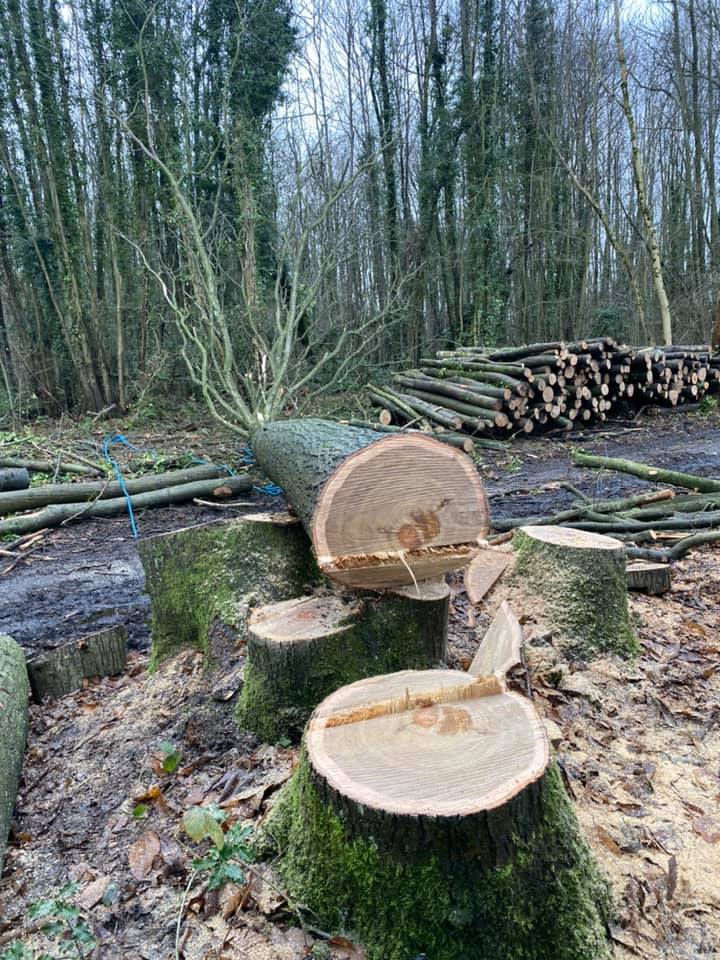
Woodlands are highly competitive environments. Trees constantly race against one another to reach the light. While a dense, dark woodland might look wild, it often suffers from poor biodiversity and stagnant tree growth. Spring is the perfect time to implement a strategic thinning plan.
Letting the Light In for Ground Flora
One of the most magical aspects of a British woodland is the spring display of ground flora. Bluebells, wood anemones, wild garlic, and wood sorrel rely entirely on the brief period of sunlight that hits the forest floor before the main tree canopy fully opens.
If your woodland is overcrowded, that vital sunlight never reaches the ground. By selectively thinning the canopy—removing weak, diseased, or poorly formed trees—you open up the woodland floor. This flush of light warms the soil, triggering dormant seeds and bulbs. The result is a vibrant, diverse understory that supports critical early-season pollinators.
Reducing Competition for Canopy Trees
Thinning does not just benefit the plants on the ground; it greatly improves the health of the trees you leave behind. When trees grow too closely together, they compete fiercely for water, soil nutrients, and sunlight. This stunts their growth and makes them more susceptible to drought and disease.
By removing the weaker competitors, you free up essential resources. The remaining trees can then expand their root systems and develop wider, stronger canopies. This practice creates a much more resilient woodland capable of weathering summer droughts and extreme weather events.
Tackling Invasive Species Early
Invasive non-native species are one of the biggest threats to woodland biodiversity. Plants like Rhododendron ponticum, cherry laurel, and Himalayan balsam grow aggressively, casting dense year-round shade and altering soil chemistry. You must strike early to keep them under control.
Striking Before the Spring Surge
Late winter and early spring provide the best opportunity to manage invasive evergreens like rhododendron and laurel. Because the native deciduous trees are still bare, these green invaders stand out clearly in the woodland. You can easily map their spread and target them without navigating through a thick summer understory.
Furthermore, clearing these species now stops them from dominating the impending spring growth. If you wait until May or June, invasive plants will have already shaded out native seedlings and monopolized the spring moisture. Early intervention gives your native flora a fighting chance to establish themselves.
Protecting Native Woodland Biodiversity
Invasive species do not just crowd out native plants; they disrupt the entire local ecosystem. Native insects, birds, and mammals have evolved over thousands of years to rely on native trees and shrubs for food and shelter. An understory choked with invasive laurel provides very little ecological value.
By physically removing or chemically treating these invaders before the busy spring nesting season, you minimize disturbance to local wildlife. This careful, timed management restores the natural balance of your woodland, inviting back the native wildlife that belongs there.
Inspecting and Maintaining Young Trees
If you planted new trees over the winter, or if you have saplings from previous planting seasons, early spring is the time to check on them. Young trees are highly vulnerable during their first few years, and a quick inspection now can save you from high failure rates later in the year.
Checking Tree Guards and Shelters
Tree guards protect young saplings from hungry deer, rabbits, and voles. However, winter weather often wreaks havoc on these protective shelters. High winds can blow them away, and heavy snow can crush them against the fragile stems of the trees.
Walk your planting sites and inspect every guard. Ensure they are pushed firmly into the soil to prevent small rodents from crawling underneath. If a guard is split or missing, replace it immediately. As the sap rises and the new buds swell, these young trees become an irresistible food source for local browsing animals.
Adjusting Stakes and Ties
Stakes keep young trees upright while their root systems establish, but they require regular maintenance. Winter storms cause “windrock,” a process where the wind violently whips the sapling back and forth. This motion creates a funnel in the soil around the base of the stem, allowing frost and water to damage the young roots.
Check that all stakes are still driven firmly into the ground. Just as importantly, check the ties that attach the tree to the stake. As the tree grows, these ties can become too tight, cutting into the expanding bark and effectively strangling the tree. Loosen any tight ties and replace broken ones, ensuring the tree has enough flexibility to move slightly in the wind, which helps build trunk strength.
Partner with SWS Countryside for Expert Woodland Management
Managing a woodland is a long-term commitment that requires foresight, skill, and an understanding of complex ecological systems. The actions you take during this transition from winter to spring directly determine the health, safety, and beauty of your trees for the rest of the year.
You do not have to tackle this critical transition alone. Professional land stewardship ensures that your woodland reaches its full potential. The team at SWS Countryside brings years of expertise to every project, offering tailored solutions that promote robust growth and rich biodiversity.
From clearing dangerous winter storm damage and strategic canopy thinning to invasive species control and new planting maintenance, we have the tools and knowledge to protect your landscape.
Ensure your woodland thrives this year. Contact SWS Countryside today to discuss your spring management plan.
- Call us at 07708 966304 or 01732 387317.
- Email us at info@swscountryside.co.uk.