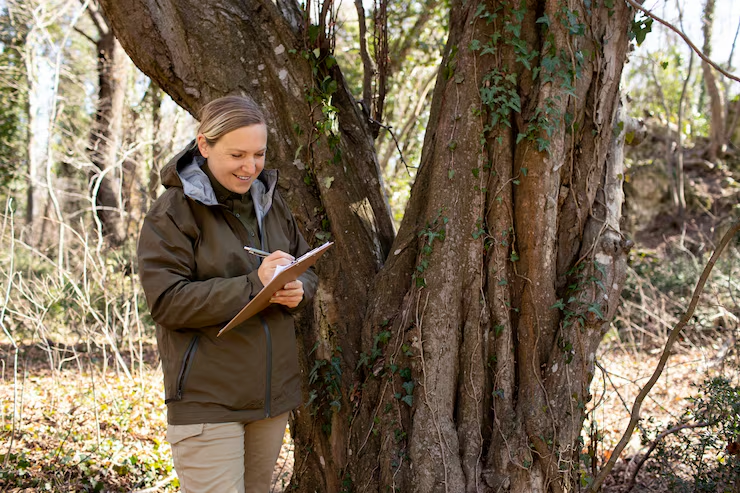
As we move from the quiet of winter into the early stirrings of spring, our landscape begins to reawaken. For land managers, this is a pivotal time for preparation. While we’ve discussed property readiness and paddock health, there’s another crucial feature that demands our attention: the hedgerow. More than just a simple boundary line, hedgerows are vibrant, living ecosystems and one of the most defining features of the countryside.
The period of late February and early March is the final, critical window for managing these vital assets. As the nesting season for birds is just around the corner, any trimming or structural work must be completed now to avoid illegal disturbance and ecological damage. Professional, sustainable management during this time ensures the hedgerow’s health, vitality, and its ability to function as a cornerstone of the rural environment. At SWS Countryside, we specialize in these traditional skills, understanding that how we treat our hedges now dictates their value for the entire year.
This guide explores why sustainable hedgerow management is so important in spring and how traditional techniques can preserve these incredible natural assets for generations.
1. Hedgerows as Superhighways for Wildlife
A well-managed hedgerow is far more than a line of shrubs; it’s a bustling corridor teeming with life. These linear habitats are essential for the survival of countless species, providing food, shelter, and safe passage across the landscape.
Creating Wildlife Corridors
In a world of fragmented habitats, hedgerows act as vital links between isolated woodlands, fields, and other green spaces. They are the “motorways” of the natural world, allowing animals like hedgehogs, dormice, and field voles to move safely, shielded from predators. This connectivity is crucial for maintaining healthy, genetically diverse populations. Without these corridors, many species would be trapped in small, unsustainable pockets of land.
A Larder and a Shelter
A dense, healthy hedge provides a year-round home and food source.
- Spring & Summer: The blossoms of hawthorn, blackthorn, and other hedge plants provide essential nectar for pollinators like bees and butterflies. The thick foliage offers protected nesting sites for at least 30 species of birds, including linnets, yellowhammers, and dunnocks.
- Autumn & Winter: The berries (haws, sloes, and hips) produced in autumn are a critical food source that helps birds and small mammals survive the harsh winter months. The dense structure continues to offer shelter from cold winds and predators.
Sustainable management aims to create a hedge with a varied structure—thick at the base, dense in the middle, and with occasional mature trees—to maximize these benefits for the widest possible range of species.
2. The Urgency of Spring Timing: The Nesting Season
The primary reason hedgerow work is so urgent in late February is the law. Under the Wildlife and Countryside Act 1981, it is an offense to intentionally damage or destroy the nest of any wild bird while it is in use or being built. The official bird nesting season is generally considered to run from March 1st to August 31st.
Carrying out hedge trimming or laying after this date carries a significant risk of breaking the law. More importantly, it can have a devastating impact on local bird populations. A professional contractor will always cease hedgerow work before this deadline to protect nesting wildlife. This makes the late winter period the last chance to get any major structural work done responsibly.
3. Traditional Management for Long-Term Health
A flail-cut hedge might look tidy, but repeated, aggressive trimming at the same height can weaken the plants over time, leading to a gappy, “leggy” structure that is thin at the base. Traditional management techniques, however, are designed to rejuvenate the hedge and promote dense, healthy growth from the ground up.
Hedge Laying: The Art of Renewal
Hedge laying is a centuries-old craft that is the ultimate form of hedgerow rejuvenation. It involves cutting most of the way through the upright stems of the hedge plants (known as pleachers) and “laying” them down horizontally.
- How it Works: The small strip of bark left intact allows nutrients to continue flowing, keeping the pleacher alive. New growth then shoots vertically from the laid stem.
- The Result: This process creates an incredibly dense, thick barrier right from the base of the hedge. It stimulates vigorous regrowth, extending the life of the hedgerow indefinitely. A laid hedge is a stock-proof, impenetrable barrier and a superb habitat for wildlife. Late winter, when the sap is not yet fully risen, is the ideal time for this work.
Coppicing and Selective Trimming
For hedges that don’t require full laying, a more sympathetic trimming regime is key. This involves cutting back sides and tops less severely and allowing the hedge to grow taller and wider over several years. It may also involve coppicing sections—cutting them right back to the ground—to stimulate new growth from the base and create a varied age structure within the hedge.
4. Practical Benefits for the Landowner
Beyond the immense ecological value, a well-managed hedge provides tangible benefits for the property.
- Stock-Proofing: A dense, laid hedge is a formidable natural barrier for livestock. It is often more effective and longer-lasting than a wire fence, containing animals without the need for constant repairs to posts and wire.
- Windbreak and Shelter: A thick hedge provides excellent shelter for livestock from harsh winds and driving rain in winter, and from the hot sun in summer. This can improve animal welfare and productivity.
- Soil Conservation: Hedges act as a barrier to wind and water, reducing soil erosion from fields. Their root systems help to stabilize the soil on banks and slopes.
Why Professional Care is a Wise Investment
Managing a hedgerow sustainably requires skill, knowledge, and the right timing.
- Ecological Understanding: A professional understands the lifecycle of the plants and the wildlife they support. They know how to manage a hedge to benefit biodiversity without compromising its function.
- Legal Compliance: Using a professional ensures you are compliant with all environmental legislation, particularly around the bird nesting season.
- Longevity: Professional care, especially traditional techniques like hedge laying, is an investment in the long-term health and existence of your hedgerow, ensuring it remains a valuable asset for decades to come.
Nurture Your Hedges with SWS Countryside
Your hedgerows are more than just boundaries; they are living pieces of history and critical infrastructure for our native wildlife. Giving them the right care at the right time is one of the most important tasks a land manager can undertake in the spring.
With the nesting season fast approaching, now is the time to act. The team at SWS Countryside has the expertise in traditional and modern hedgerow management to ensure your hedges are healthy, compliant, and thriving.
Contact us today to schedule your pre-nesting season hedgerow management.
- Call us at 07708 966304 or 01732 387317.
- Email us at info@swscountryside.co.uk.