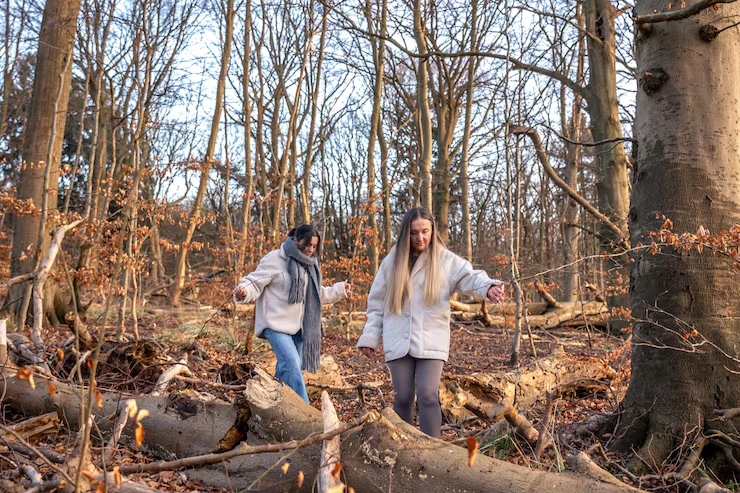
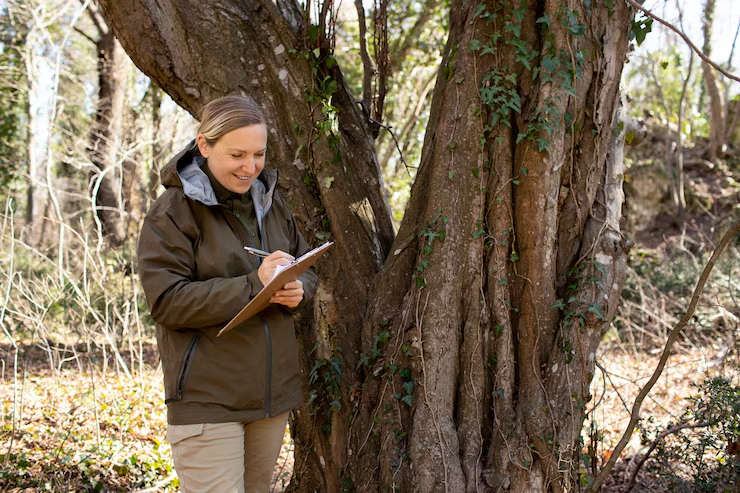
A woodland is more than just a collection of trees. It is a complex, living ecosystem that holds immense potential. For landowners, a woodland can be a source of income, a haven for wildlife, a recreational retreat, and a powerful tool for environmental stewardship. However, to unlock these benefits, a woodland needs care. A neglected wood can quickly become a dense, unproductive thicket with low biodiversity and significant fire risk.
Professional woodland management is the key to transforming an underperforming wood into a thriving, valuable asset. It’s a long-term investment that delivers returns across ecological, financial, and recreational spheres. At SWS Countryside, we apply expert knowledge and sustainable practices to help woodland owners realize the full potential of their land. This guide explores the top five reasons why investing in professional woodland management is one of the smartest decisions a landowner can make.
1. Boost Biodiversity and Create Thriving Habitats
Perhaps the most inspiring reason to manage a woodland is to enhance its biodiversity. An unmanaged wood is often dark and uniform, dominated by a few species that create a dense canopy, blocking light from the forest floor. This limits the variety of life that can survive there. Sustainable management practices break up this uniformity and create a mosaic of different habitats.
Restoring Balance with Thinning and Coppicing
- Thinning: This practice involves selectively removing some trees to reduce competition for light and resources. This allows the remaining trees to grow stronger and healthier. More importantly, it opens up the canopy, letting sunlight reach the woodland floor. This encourages the growth of a diverse understory of wildflowers, ferns, and shrubs, which in turn provides food and shelter for a wider range of insects, birds, and small mammals.
- Coppicing: This traditional technique involves cutting trees at their base to stimulate new growth. By managing a woodland on a rotational coppice cycle, different sections are at different stages of growth. This creates a rich tapestry of habitats, from open, sun-drenched clearings perfect for butterflies and wildflowers, to dense, young thickets that offer safe nesting sites for birds like warblers and nightingales.
By creating this variety, professional management can transform a quiet wood into a vibrant ecosystem humming with life.
2. Increase Financial Returns and Generate Sustainable Income
A well-managed woodland is not just an environmental asset; it’s a productive one. With a professional management plan, your woodland can generate a sustainable income stream, helping to offset costs and provide a long-term financial return.
Harvesting High-Quality Timber
Through selective thinning, woodland managers remove weaker trees and favor the growth of straight, healthy specimens. Over time, this produces high-quality timber that can be sold for a premium. A long-term management plan will outline a sustainable harvesting schedule, ensuring that you can draw an income from your woodland without depleting the resource.
Generating Wood Fuel and Other Products
The wood harvested during thinning and coppicing is also perfect for the growing wood fuel market. It can be processed into firewood or biomass chips, providing a reliable local source of renewable energy. Additionally, sustainably managed woodlands can produce other products, such as materials for fencing, rustic furniture, or charcoal. This diversification creates multiple income streams from a single resource. Professional managers can help you identify these market opportunities and manage the logistics of harvesting and sales.
3. Enhance Recreational Opportunities and Personal Enjoyment
Your woodland can be a private sanctuary for you, your family, and your community. Professional management makes it a safer, more accessible, and more beautiful place to spend time.
Creating and Maintaining Access
An overgrown wood can be an impenetrable tangle of brambles and fallen branches. A management plan often includes the creation and maintenance of pathways and tracks. This not only makes it easier to walk, hike, or ride through the woodland but is also essential for managing the area effectively. Clear paths create a more inviting space for recreation, whether it’s for quiet walks, bird watching, or educational activities.
Improving Safety and Aesthetics
Management improves the overall look and feel of a woodland. By removing hazardous deadwood and thinning dense stands, the wood becomes a brighter, safer, and more welcoming environment. The visual appeal of a well-cared-for forest, with its open glades and majestic trees, significantly enhances the amenity value of your property.
4. Mitigate Climate Change and Improve Environmental Health
Woodlands are on the front line of our efforts to combat climate change. As a woodland owner, you are in a unique position to make a tangible, positive impact on the environment.
Maximizing Carbon Sequestration
Trees are natural carbon sinks, absorbing CO2 from the atmosphere and storing it in their wood. A healthy, actively growing forest sequesters carbon much more effectively than a stagnant, over-crowded one. By thinning the woodland and ensuring the remaining trees have the resources to thrive, sustainable management maximizes the amount of carbon your woodland can store. The wood products harvested also keep that carbon locked away for decades.
Protecting Soil and Water
The dense canopy of a well-managed woodland helps to intercept heavy rainfall, reducing soil erosion and preventing runoff into nearby rivers and streams. The rich layer of organic matter on the forest floor acts like a sponge, soaking up water and filtering it as it replenishes groundwater supplies. This natural water management system helps to reduce flood risk and improve local water quality.
5. Increase the Resilience and Long-Term Health of Your Woodland
A managed woodland is a resilient woodland. It is better equipped to withstand the challenges of pests, diseases, and a changing climate.
Reducing the Risk of Disease and Fire
By removing weak and diseased trees, managers help to stop the spread of pathogens. Improved air circulation in a thinned woodland also creates less favorable conditions for fungal diseases to take hold. Furthermore, managing the amount of dry, dead material on the forest floor and creating strategic firebreaks can dramatically reduce the risk and potential severity of a wildfire—a growing concern in many parts of the UK.
Building a Legacy for the Future
Investing in woodland management is about more than just short-term gains. It is about building a legacy. A professionally managed woodland will continue to grow in ecological and economic value for generations to come. It’s an investment in the future health of your land and the planet.
Partner with SWS Countryside for Expert Woodland Management
Unlocking the full potential of your woodland requires a strategic vision, expert knowledge, and a commitment to sustainable practices. The team at SWS Countryside has the experience and passion to help you achieve your objectives, whether they are ecological, financial, or purely for your own enjoyment. We develop bespoke, long-term management plans that will transform your woodland into a healthy, productive, and resilient asset.
Contact us today to schedule a consultation and discover what professional woodland management can do for your property.
- Call us at 07708 966304 or 01732 387317.
- Email us at info@swscountryside.co.uk.
Invest in the future of your woodland with the trusted expertise of SWS Countryside.